 Leork Hotels
16 September 2026
Leork Hotels On the drive to Kalam you pass through one of the richest historical landscapes in Pakistan, and most travellers don’t stop. Between the end of the Swat Motorway and Mingora there are Buddhist stupas older than most of the world’s cathedrals, a mosque nearly a thousand years old, a museum full of Gandharan sculpture, and above Saidu Sharif, a marble palace where Queen Elizabeth II once stayed. Most of it sits on or just off the main road. With half a day, you can see the best of it and still keep the trip to Kalam on track.
Swat was a major centre of Gandharan Buddhism for roughly a thousand years. Chinese pilgrims wrote about hundreds of monasteries in the valley. Alexander the Great fought his way through here in 327 BCE. Later came the Hindu Shahi kings, then the Ghaznavid sultans from Afghanistan. In the 20th century Swat was a princely state with its own ruler, the Wali, until it merged into Pakistan in 1969.
Much of what we know comes from the Italian Archaeological Mission, which has been digging in Swat since the 1950s and still works here today. In November 2025 it uncovered a small 1,200-year-old temple at Barikot. Excavations near Zalamkot are revealing a fortified city nobody knew existed.
The first stop is impossible to miss. Shingardar Stupa stands right beside the Barikot to Mingora road, on your right as you drive north. It is a big cylindrical stupa on a square base, around 27 metres across, and legend says King Uttarasena built it to hold his share of the Buddha’s relics. Scholars disagree on the date, anywhere from the 1st to the 6th century CE. Pull over for 15 minutes and walk around it.
Barikot itself is the ancient city of Bazira, which Alexander besieged and took in the autumn of 327 BCE. The excavated remains sit just off the road. If you have extra time, Amluk Dara stupa is about 8 km from Barikot on the Karakar road, one of the best-preserved stupas in the valley.
About 11 km further on, the village of Udegram has two layers of history on one hill. At the top are the ruins of Raja Gira’s castle, the stronghold of the last Hindu Shahi ruler of the area. Below it is the Ghaznavid mosque, built in 1048-49 according to an Arabic inscription found in 1984. It is considered the oldest dated mosque in northern Pakistan. Locals call it the Mahmud Ghaznavi mosque.
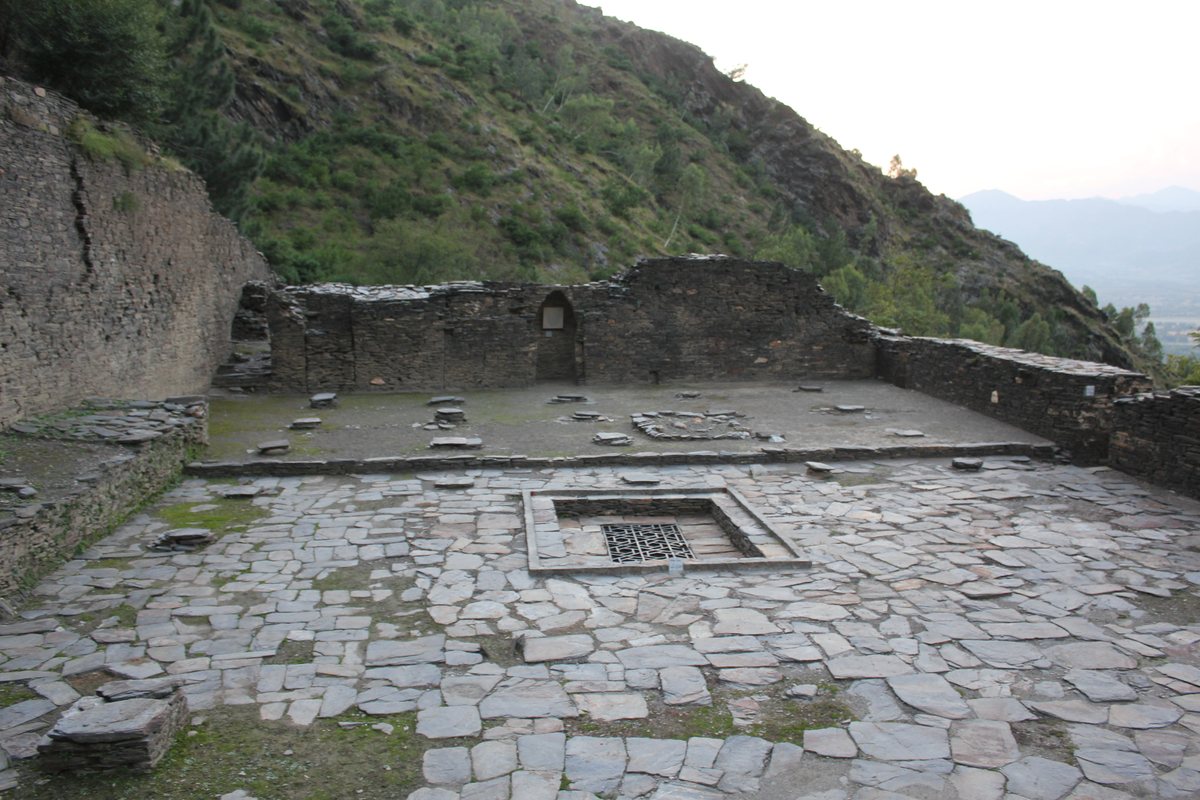
The walk up to the mosque takes 45 minutes to an hour there and back. The castle above is a much steeper climb, worth it for fit walkers with time to spare.
Just past Mingora, on Saidu Sharif Road, the Swat Museum is the heart of the trail. It was set up by the Wali of Swat with the Italian mission and opened in 1963. After damage in the 2005 earthquake and a 2008 bomb blast, it was rebuilt to resist earthquakes with Italian funding and reopened in December 2014.
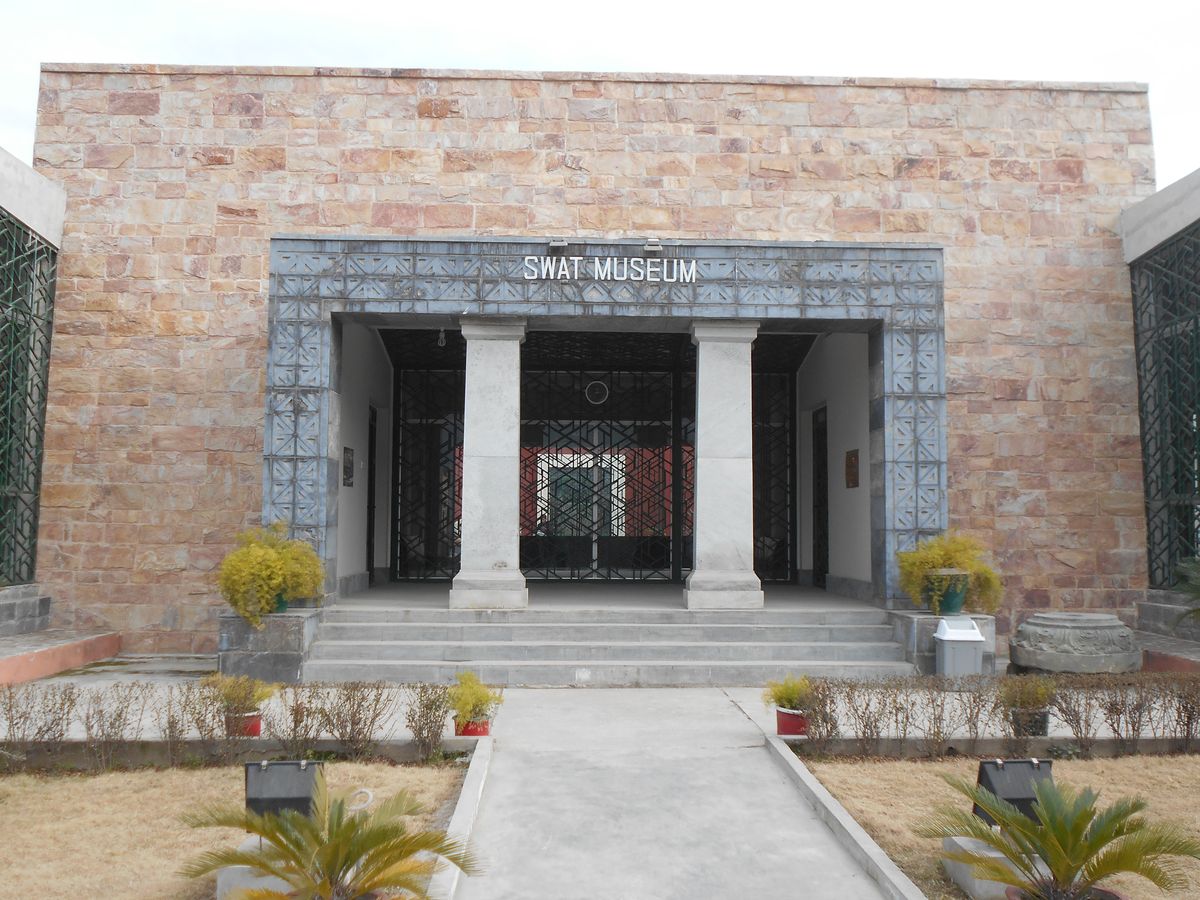
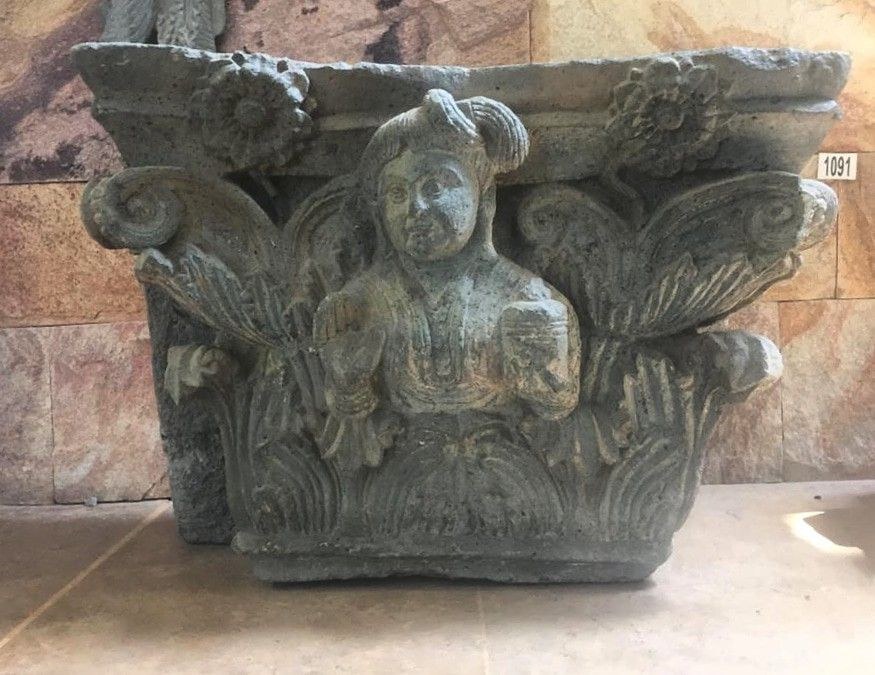
Inside are more than 3,000 objects from around 60 sites in Swat, from about 300 BCE to the 18th century. The Gandharan galleries are laid out to tell the Buddha’s life story in stone, so even if you know nothing about Buddhism you can follow it. The ethnographic section, with Swati embroidery, carved wood and old silver jewellery, is a good counterpoint. Allow an hour to an hour and a half.
Practical: tickets are cheap, but phone photography has a separate charge. Opening hours are usually around 9 a.m. to 5 p.m., but they are not officially published, so call the KP Directorate of Archaeology on 091-9211488 if you are planning around them.
About a kilometre from the museum, down a lane and across a field, is Butkara I, one of the most important Buddhist sites in the whole Gandhara region. The main stupa was built around the 2nd century BCE, possibly earlier, and then enlarged five times, each new shell built over the old one. The Italian mission excavated it between 1956 and 1962 and found coins from a string of ancient kings in its layers. Many of the best pieces from the site are in the museum you have just seen.
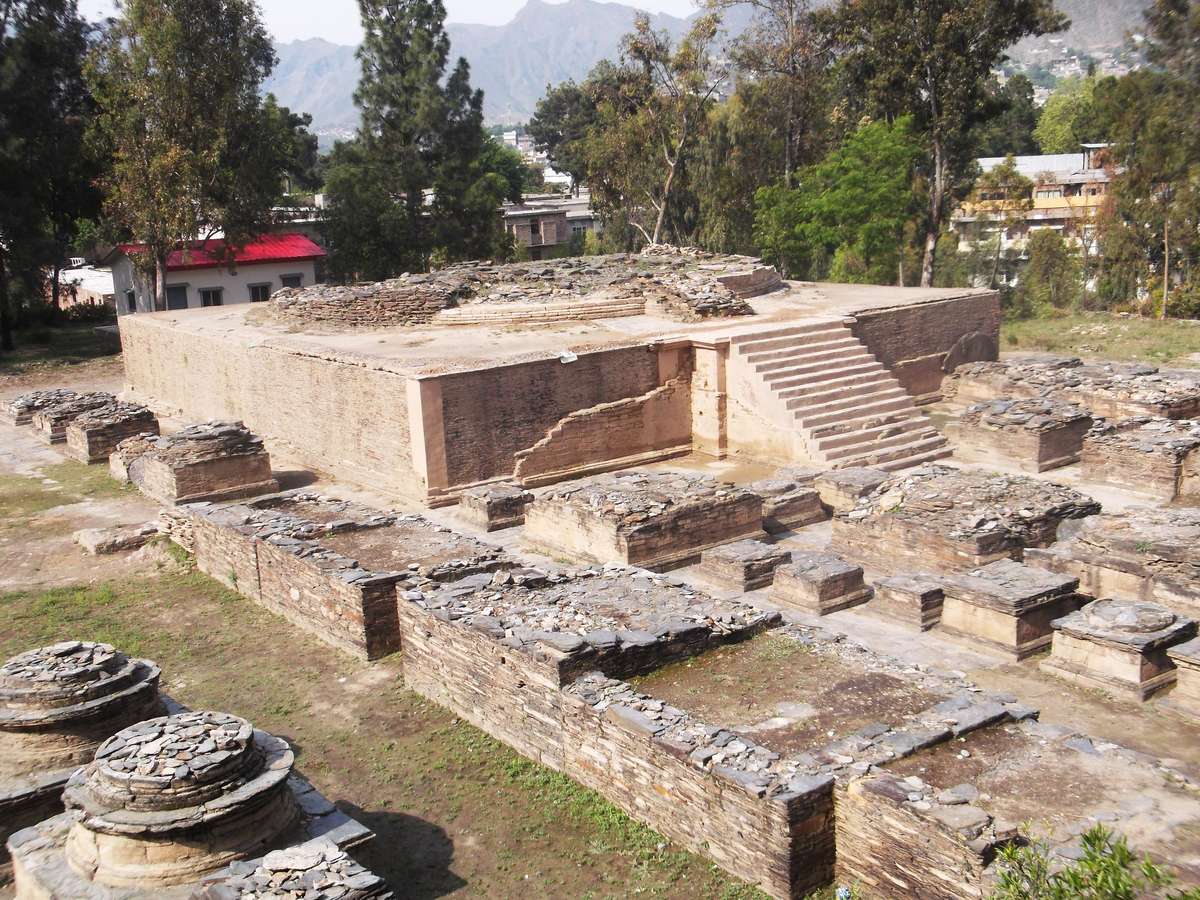
Today you walk among the base of the great stupa and a court of smaller votive stupas around it. Give it 30 to 45 minutes. It is quiet, and you will likely have it to yourself.
On the road toward Manglawar, about 11 km from Mingora, a huge seated Buddha is carved into a rock face above the fields. It is 6 to 7 metres high and dates to around the 7th century. In September 2007, militants drilled into it and blew away half of the face. Between 2012 and 2016, an Italian team rebuilt the face using laser scans and old photographs. They deliberately left the repair visible, so the damage remains part of the statue’s story.
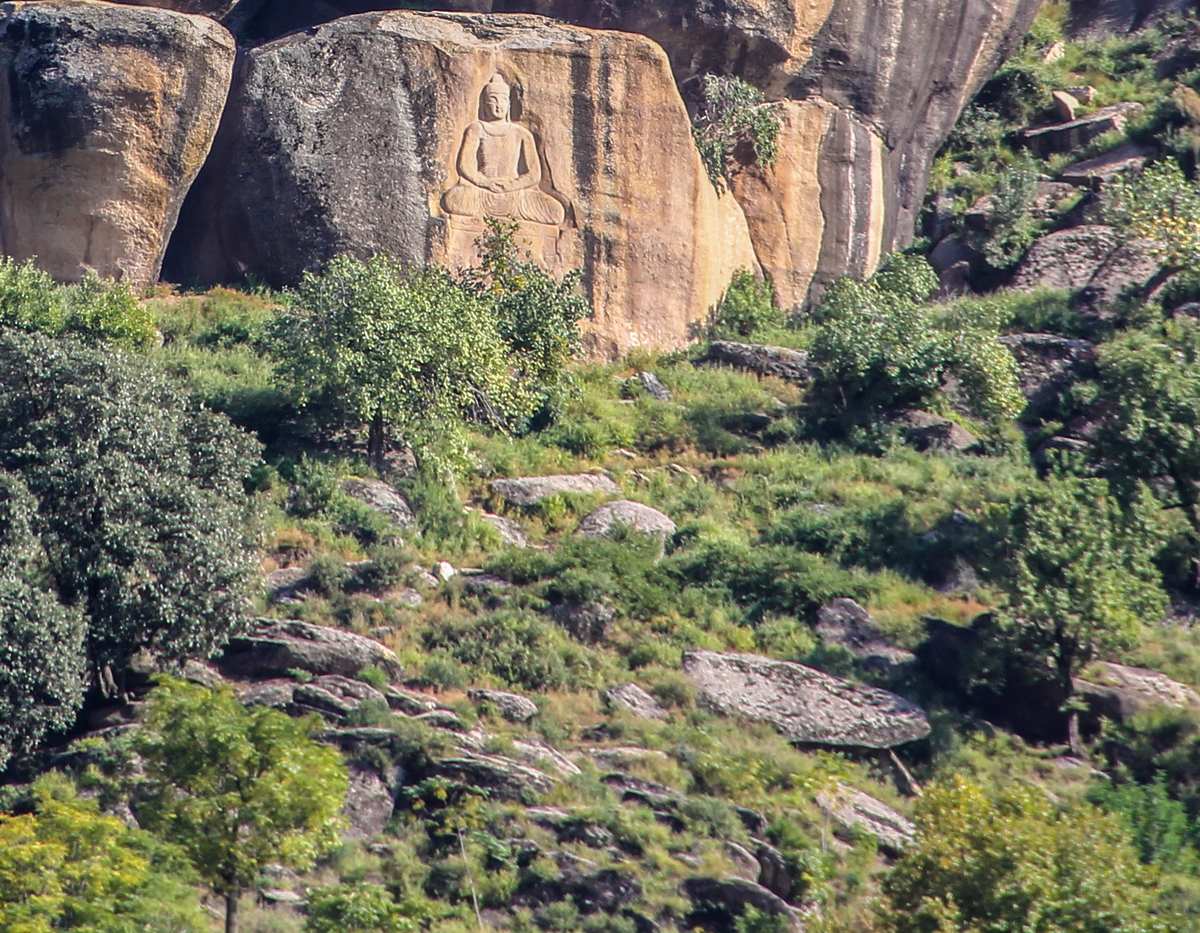
It is a short uphill walk from the road. Manglawar is also the turn-off for Malam Jabba, so this pairs well with our Malam Jabba guide.
About 13 km south of Saidu Sharif, up a green side valley, is the White Palace (Sufaid Mahal), built around 1940 by Miangul Abdul Wadud, the first Wali of Swat. It is faced in white marble from Rajasthan, the same region that supplied the Taj Mahal, and in 1961 Queen Elizabeth II and Prince Philip stayed here for three days.
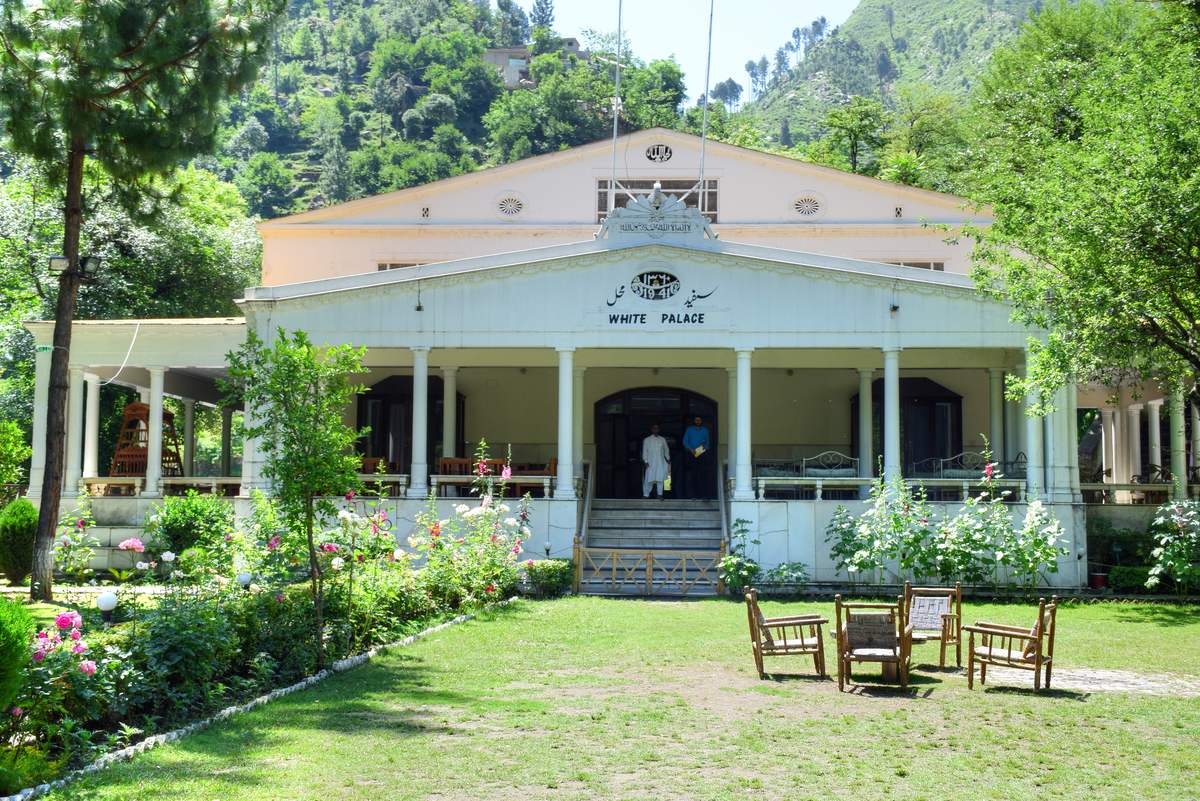
Today it is a hotel owned by the Wali’s descendants. Most visitors come for tea in the garden and the cool air at about 2,100 metres. Parts of the building have aged, but the setting is still lovely. Allow about 30 minutes each way from Saidu Sharif.
| Plan | Stops | Time |
|---|---|---|
| Half day (on the route) | Shingardar, Udegram mosque, Swat Museum, Butkara I | 4 to 5 hours |
| Full day | Half-day stops + Jahanabad Buddha or White Palace (+ Amluk Dara if early) | 7 to 8 hours |
Kalam is still about 95 km and roughly 3 hours beyond Mingora on a slow mountain road. If you spend more than a couple of hours on history, sleep in Mingora and drive up to Kalam the next morning. Driving the upper valley in the dark is not worth it.
From Islamabad, the Swat Motorway now runs to Chakdara, about 25 minutes before Barikot. The second phase toward Fatehpur has been under construction since March 2026. Our Islamabad to Kalam travel guide covers the full route.
If Rawalpindi’s own Buddhist monument interests you, our Rawat Fort and Mankiala Stupa guide covers the 2,000-year-old stupa just outside the city, from the same Kushan era.
The history trail is the first day of the valley, and Kalam is the second. LEORK Hotel Kalam is opening soon near Kalam Bazaar, with heated rooms in Twin, Master, Quad, Duplex and Family layouts, private parking and the Treehouse Restaurant. Once you are up there, our 12 best places to visit in Kalam and hidden gems guide take over.
Coming from Lahore or further south? Stop in Rawalpindi first. Our road-trip stopover guide explains the plan, and LEORK Hotels Rawalpindi on GT Road has the parking and late check-in for it.
Planning a Swat trip? WhatsApp +92 333 9588862 for LEORK Hotel Kalam opening dates, or book your Rawalpindi stopover.


